tamarjacobson

Looking back and thinking forward

CONSULTANT AND PRESENTER

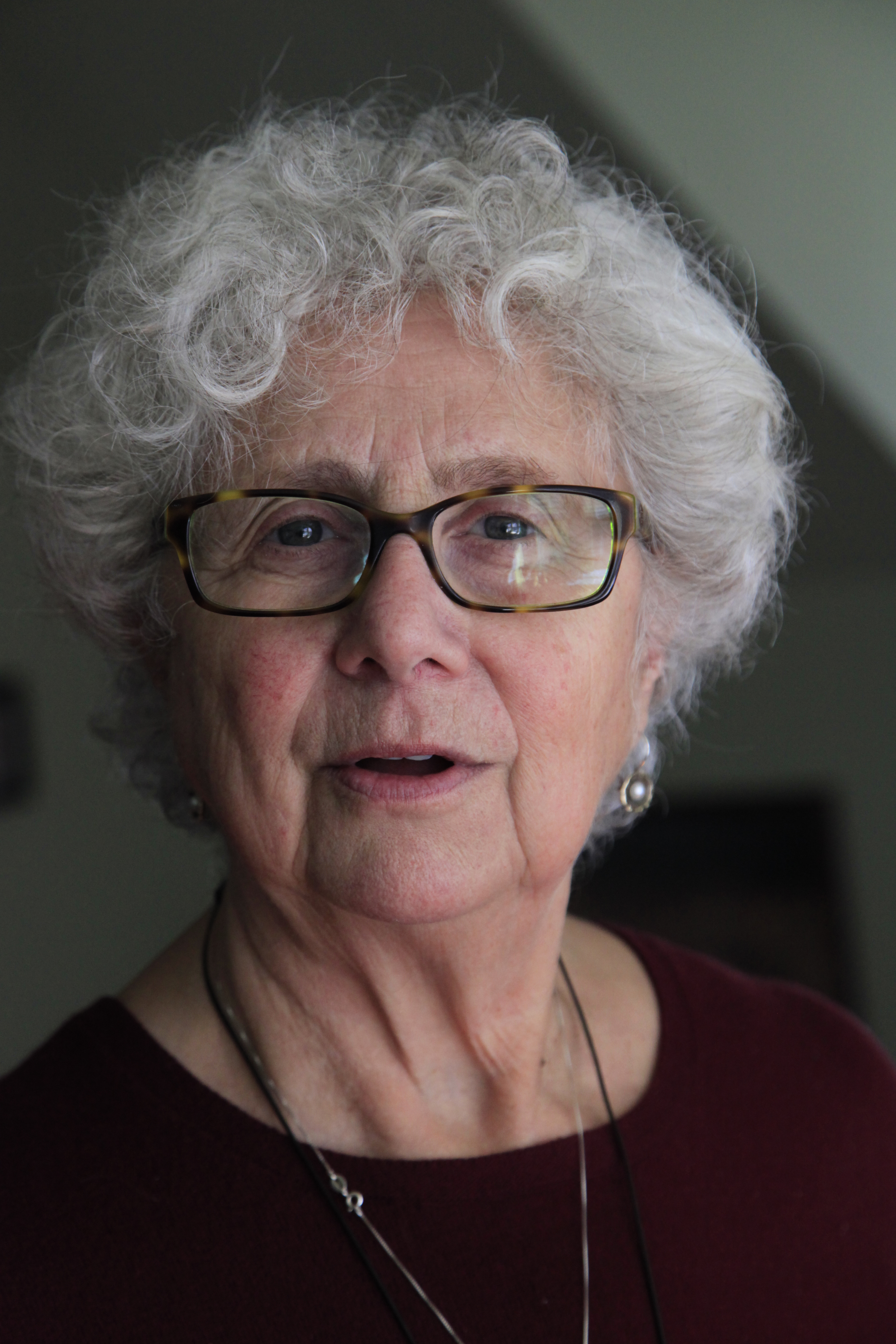
_MG_0425Dr. Tamar Jacobson:

Early childhood development and education consultant for early childhood programs, organizations, and families.

IMG_3356     IMG_3356

CHECKOUT my Podcast with That Early Childhood Nerd, August 2023

CHECKOUT MY JULY PODCAST INTERVIEWS WITH CHILD CARE BAR AND GRILL:

PART 1 AND PART 2

CHECKOUT MY BLOGPOST: NY EARLY CHILDHOOD PROFESSIONAL DEVELOPMENT INSTITUTE

NBC News (Think) Article

Article in ColoradoParent.Com

BIO:

Tamar Jacobson is an early childhood development and education consultant for early childhood programs, organizations, and families. She was born in Rhodesia, now Zimbabwe, and traveled to Israel where she became a preschool teacher with the Israeli Ministry of Education. Jacobson completed a doctorate in early childhood education at the University at Buffalo (UB). As Director of the University at Buffalo Child Care Center (UBCCC), she created a training site for early childhood students from area colleges including UB.

Jacobson is a retired Professor from Rider University, New Jersey, and served as Chair of the Department of Teacher Education for seven years. Dr. Jacobson serves on the Consulting Editors Panel for NAEYC, was recipient of the 2003 Director of the Year Award, National Coalition of Campus Children’s Centers, the 2013 National Association for Early Childhood Teacher Educators (NAECTE) Outstanding Early Childhood Teacher Educator Award, and is a former Fellow in the Child Trauma Academy. Tamar Jacobson presents at International, National, State and Regional levels. She is author of: Confronting Our Discomfort: Clearing the Way for Anti-Bias (Heinemann, 2003), Don’t Get So Upset! Help Young Children Manage Their Feelings by Understanding Your Own (Redleaf Press, 2008), Everyone Needs Attention: Helping Young Children Thrive (Redleaf Press, 2018). FACEBOOK PAGE

Annual occurrence of a notable event

A New Year and a blogging anniversary. Is it 18 years already? My blog is almost an adult now. So many times I feel as if my writing days are over and then something inspires me to continue. It was indeed a notable event when I started blogging eighteen years ago. We had arrived in Philadelphia and I was in the process of finding a job in the area. We had left Buffalo and I knew no one and nothing in or about Philadelphia. Life partner went to work every day and I wandered around the woods and streets walking and reflecting. I had left behind friends, my therapist, and everything I knew about America since immigrating seventeen years prior. My editor suggested I create a blog and so I did. It saved me in so many ways. I found friends all over the world and was able to practice writing so that others might read what I wrote. As the years went by I was able to use some of my writings in two more books that I would have published. Nowadays so many of my blogger companions had ceased to write in their blogs, using Facebook and Twitter etc. as a format for sharing their ideas and lives. And I have been blogging much less. Sometimes I write only a few posts a year. I remain loyal to blogging though.I keep a private journal as well and am writing anecdotes toward a memoir. I even belong to a writers' group and enjoy sharing my writing as well as listening to the others recite their stories. I also joined Storyworth, which is a website that sends me a weekly prompt to write a series of 52 stories that can be self-published later to share with family members. These prompts seem quite narcissistic in a way: "How do I want to be remembered?" What am I most proud of?" Things like that. These are not easy for me.

Here is the first one I wrote:

Things that I am most proud of: Giving birth: I could not believe that I had the capacity to push an infant out of my body, and then to realize the child was a boy. It was something that was expected of me in our culture and during that era – the seventies. I felt like finally I got something right. My doctorate: Completing my doctorate had a number of steps that I felt pride over. Oral exams, comprehensive exams, the dissertation – especially the first chapter – the defense and, finally, the graduation ceremony. Enormous pride and a feeling of accomplishment that I hadn't had before or since. My first book: was nothing short of miraculous for me. First, to be invited to write on a topic I had been thinking about for many years. That was like winning the lottery. Second, to receive assistance and support from an editor who believed in my work, challenged my thinking, and helped expand my ideas and feelings into a book I loved. It felt as if I had given birth a second time. But this time it was through my control and expertise. My editor accompanied me on my authoring journey from beginning to end and seemed to share in my pride and happiness. Singing: I also loved to play piano and sing. I sang in front of the camp fire at youth movement gatherings. I sang with guitarists who understood my rhythm and helped me express myself. There weren’t many of those. I enjoyed pleasing people with my voice and felt pride when they enjoyed the singing so much that they focused on listening to me and even gave me their full attention. I sang lullabies to my young son at bedtime. Nowadays, I especially love singing when he (as a man in his late forties) accompanies me on the piano or guitar. I sang the song, “Sunrise Sunset,” from Fiddler on the Roof at his wedding party while he accompanied me on his keyboard. I was proud and overjoyed at that moment. During the song I turned to look at my daughter-in-aw and saw she was crying with emotion. My heart was full to overflowing. Every single time I sing – whether alone accompanying myself on the piano, or in public with someone else accompanying me – I develop a hoarse, sore throat or full-out laryngitis almost immediately afterward.

I was taught that pride comes before a fall. And, mostly, I am not proud of myself at all. I write a list of what I have achieved and even when I reflect on the items in the list, I have to admit that the feeling of pride still eludes me.

I would rather be awake

Why would you prefer to sleep through this?

I would rather be awake. Awake – vital – with all my faculties. Even with discomforts and especially the pain. For I have learned buckets of wondrous things through experiencing pain. I have to say my life has been enhanced by the lessons learned from my mistakes. It has made me more accepting, patient, understanding, and, even at times, at peace. I have learned to love all sorts of people, animals and nature, and life has become bigger, wider, and global. I have broadened my perspective and my mind has expanded.

So why would I prefer to sleep through all of this?

For that's what the Republican party and its candidates promise me now, today, and tonight at their first primary debate. They are fighting being "woke." They say it over and over again. Indeed, they have openly declared war on "woke." They are in terror for their lives – for their white privilege. They are running scared, screaming white supremacy at me whenever they get the chance. They have closed down their minds and prefer to sleep through it all. They are afraid of expanding their horizons, perspectives and of anything, anyone who is other than them.

Why?

What has happened to millions of people in this country that make them prefer this state of mind? 

So: "Wake up!" I respond to their tirades. We are slip-sliding into the deepest despair and darkest period of our lifetimes. Our time is right now to embrace all humankind and lead us to the light. I beseech you. Have the strength and courage to face your deepest, unconscious fears, and confront your discomfort. Search within for your capacity for compassion and the audacity to hope. Let's do this together.

Wake up! Wake up to being woke. As woke and as awake as we can be. 

Writing

Writing: ten minutes: go …

I write to express myself. I write to understand what I'm feeling. I write to describe my life to me and others. The more I write the more I understand about writing. Sometimes I get writer's block. Quite often these days. I start to think of something I want to write about and when I sit down to write nothing comes out of my brain or my fingers if I'm typing. I love writing by hand because I feel like the feelings and ideas flow more easily. Somehow writing by hand conjures up memories that surprise me. I remember that when I was young I would play out my dreams and feelings with small dolls that I had collected along the way. And then when I was about fifteen and sixteen I started to write down fanciful and fantastical stories usually about me being some kind of heroine. Once I wrote about how I parachuted into Germany during the second world war and saved a whole bunch of Jews from perishing in gas chambers. I always admired Joan of Arc and Mother Theresa. I wanted to be someone who was completely courageous and not afraid to sacrifice herself in the service of others. I have always admired people who do brave and challenging social justice work, and wished I had much more courage. When I was a young adult I yearned to become a nun even though I grew up in a Jewish household where all the adults were atheists. There was something courageous about being a woman who did not need to find a man to save her and take care of her. Just to be self sufficient and know what she wanted. I wanted to be like that. But that never happened. When I write I feel powerful and sometimes worry that I say too much of everything that I feel. My truth seems to have hurt others in the past. My truth I define as validating my feelings around experiences I was involved in. We all experience a similar incident in different ways because of our different life experiences growing up. Ten minutes is a long time to be writing about writing. I realize as I do this exercise that I kind of need to write each day even for just 10 minutes at a time and see where my thoughts, feelings and memories take me. I have often found that after I write about something that is challenging emotionally, at the end of it I discover I am hoarse – almost as if I have been talking for a long time – or perhaps it is because I feel that when I say what I'm feeling, I experience it as making too much noise, taking up too much space, equivalent to shouting. I used to get hoarse after singing with my guitar in a coffee house or around the fire at camp when I was young. Self expression apparently is dangerous for me in some way. I know that my mother really did not like it when I was self expressive about my needs or desires, hurt feelings or simply my opinion. She would become enraged and deeply hurt by me and tell me I was destroying her. That scared me to the core. Most especially because I could not seem to say sorry enough to heal the hurt I had allegedly caused her. When I was a child I would leave notes lying around the house apologizing for what I had done. She did not acknowledge them and I felt at such a loss – such a failure – like such a bad person for hurting her so badly.

This hurts. And thankfully I hear the timer beeping.

10 minutes are up and I have written about writing.

Not yet, please. Not yet.

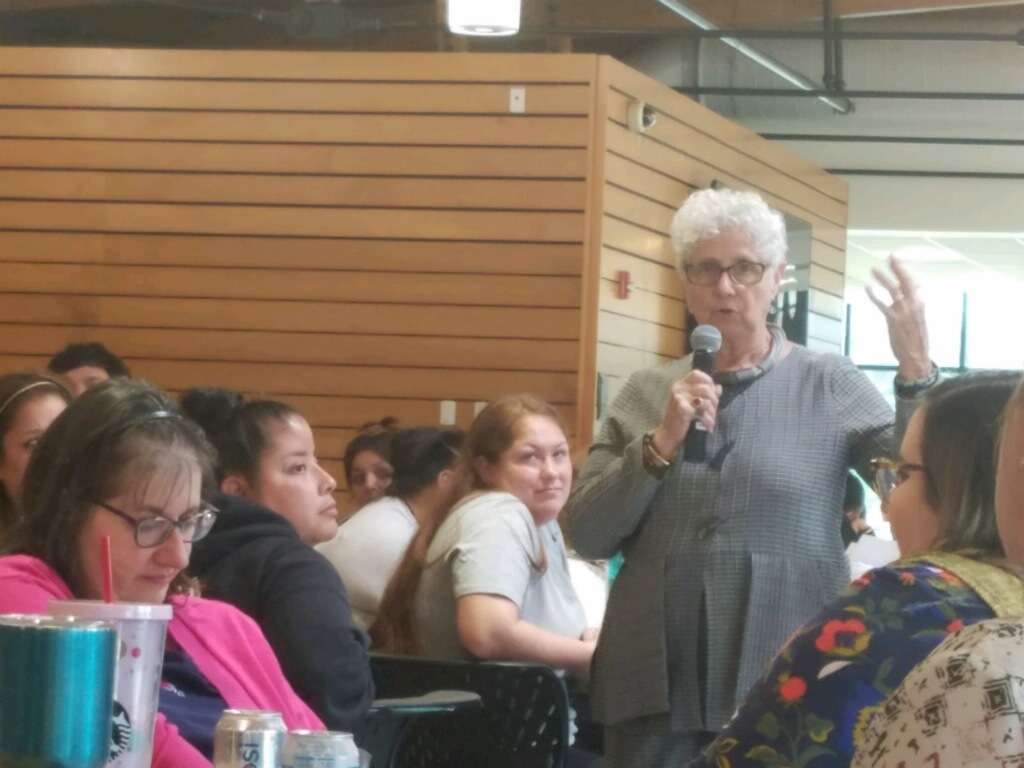
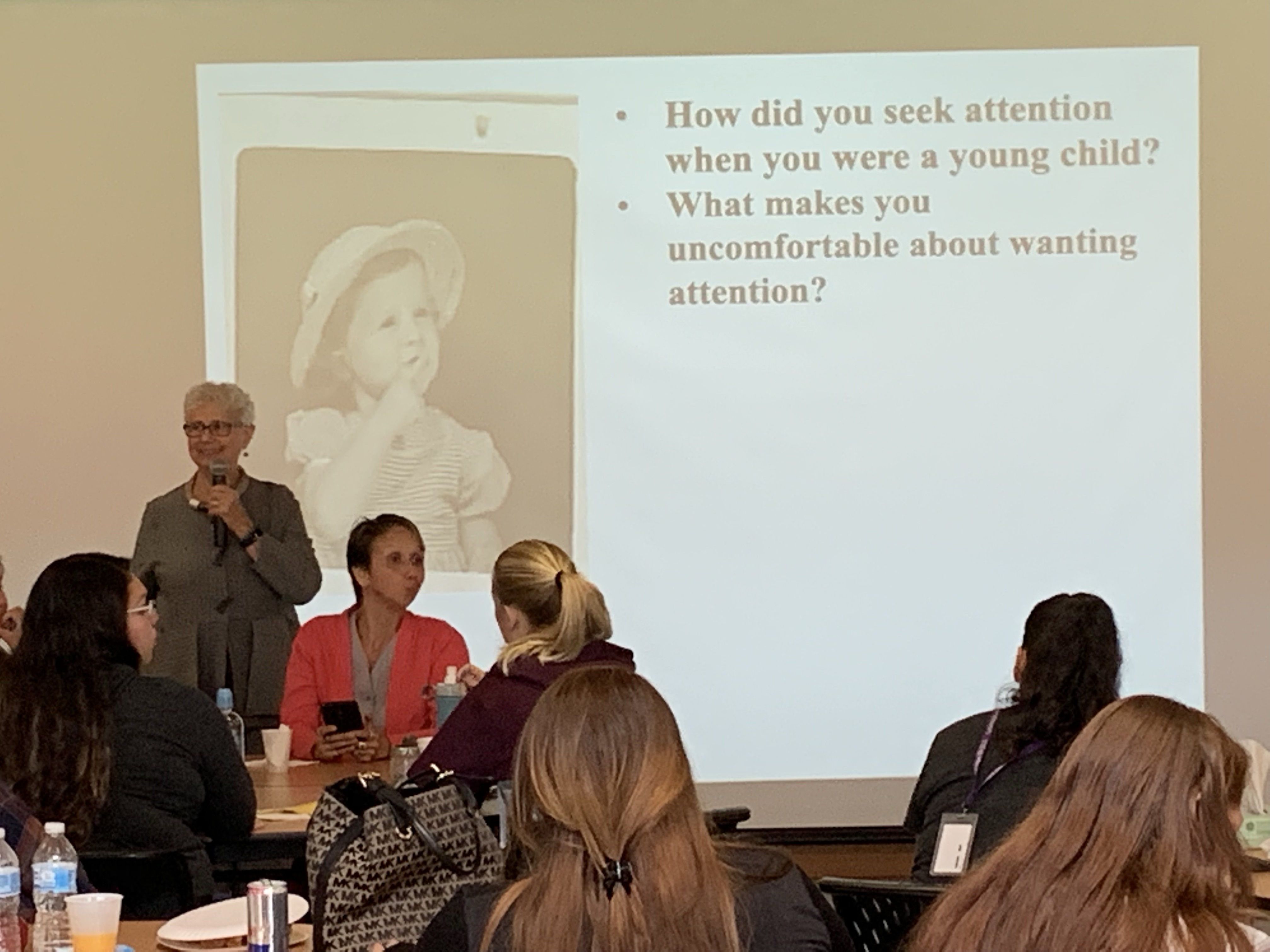
Time to write again. About early morning plane rides. About enjoying talking to early childhood people. About presenting and feeling worthwhile when people get something out of what I talk about. They tell me that when I share my stories it helps them identify with much of what I’m saying. They tell me I am real and that other sessions are sterile and bland where they feel talked at instead of with. They tell me I confirm for them the work they are already doing and it makes them feel so much better about themselves. They cry. They laugh. They share their pain and tribulations. I look at their faces when I talk to them and they are keenly listening, sometimes with tears running down their cheeks. And when they laugh, they laugh out loud with gusto. I love all of it. It’s the human condition in a nutshell. And for a brief time, a few hours or a day, I feel a part of their lives and they a part of mine. We are not alone as we strive to work toward caring for and educating our youngest children as well as their teachers and caregivers. I realize that the work I am doing is important. It makes a difference. Here and there, a child will receive a better emotional deal because someone had the courage to reflect on why they do what they do. They will remember how they felt listening to me talk, and they will try and apply what they learned. Perhaps they will have a better day for it. They will feel confident and connected, and their relationship with a child will be enhanced. The child will be given a different option in how she sees herself, and might feel validated and worthwhile even for a moment, or maybe longer.

Recently, at one of my presentations, I asked: “If you were a child in your program, how would you like to be treated?” A young woman called out: “Softly!” I asked what she meant by “softly,” and she replied, “With soft voices and gentle touch.” As she spoke, I observed a pregnant woman in the audience begin to rub her protruding belly with round, soft, gentle strokes. Her eyes glazed over, and I thought to myself, “She is communing with her child.”

At one of our breaks during the day-long professional development, the young woman, who had called out, “Softly!” ran over and sat down next to me.

I love you,” she stated clearly with an earnest look on her face.

Oh, my dear,” I replied, “Thank you.”

No. Seriously,” she said. “What you are saying is so important. No one ever talks about these things in this way. You must not stop doing this. Please don’t stop yet.”

I asked her to tell me about herself and she shared her early childhood story. One of pain and confusion, and how nevertheless, she had persisted courageously to break away and search for a different path. She told me how she felt I had reinforced her search. She talked about resilience and love. She spoke about how she wanted to work with children in a gentle way, softly, and then she asked permission to hug me. We hugged for a long while. A strong, warm hug, which filled my heart to overflowing.

I was feeling old and tired. It happens with aging, and perhaps I am winding down. That’s okay. It’s as it should be. This time around, though, I received a message: “Not yet. Please. Not yet.”

A year ago at Mining Nuggets: My ankle

My ankle

Lately, I've been writing for ten minutes from a given prompt. I'll be posting these bits and pieces from time to time, and maybe one day they will be included in a memoir.

Prompt: Body part

My ankle has been giving me problems pretty much ever since I turned fifty. I have feet like my mother with the big toe on each foot turning toward the pinky toe. Creating a bunion. Classic stuff of aging I suppose. In addition though, my left foot has a fallen arch. So, at times my ankle on my left foot swells a little and it becomes painful to walk. I’ve developed a limp. For a while it infuriated me. I was angry at getting old and bereft of my lithe, young, agile body that I once had. I felt as if my body had become my enemy and I would growl, groan and grimace when I looked at myself in the mirror or even if I just looked at my feet while putting on my shoes. And then one day I read something – I can’t remember what – and realized that my body is important for me. After all, it carries me around and allows me to do things that my mind is thinking about: walk to the store, walk in the woods, dance, go up and down stairs, carry me to sleep, or just sit in a chair to read or meditate. It wasn’t that I needed to love my body. But just acknowledge its importance in my life, and learn to appreciate its worth. Am still not quite sure what that means, but I find that when I am becoming agitated or frustrated with my aching ankle, I say to myself quietly, “Thank you for all you do for me, ankle. You carry me from place to place, even when I don’t take care of you very well. After all, I put on weight without thinking how hurtful that is for you, or how hard it makes it for you to carry me around. All I ever seem to do is growl at you.” And when I do that kind of compassionate talking, somehow the ankle feels a little better and I find myself walking with less of a limp. It’s quite amazing really. Recently, I decided to take myself in hand and eat less and move more in order to try and shed some of the pounds I’ve gained since moving to a condo and not having three flights of stairs to deal with daily as I did in our old house. Indeed, my life has become easier and as a result I have neglected my body by enjoying just sitting around eating delicious cookies. But the more I thought of the burden that my ankle has to carry, the more I realized how cruel and thoughtless I have become when it comes to my body or its parts. I mean. How else will I live if I don’t take care of myself?

Note: This piece of writing reminded me of a post I blogged about in 2008: A womb of my own

The meaning of memoir – 10 minutes: GO!

How do I write my memoir? Where do I begin? Which part of my life story is the important one – the crux, the kernel, the source of the meaning of my life? What makes my life more meaningful or worthy for the telling of it? Is it because I grew up in Africa, lived my formative young adult years in Israel, and then the remainder of my life in the United States? Does it matter that I lived on three continents in different countries? Why would that matter? Perhaps it helped me become more understanding of differences in attitude, culture, perception. Perhaps. Although I am sure that the teachings in my earliest childhood formed many of my prejudices and biases that I've had to negotiate throughout my life. Longing for my black African nanny as the one true source of love and acceptance of me as a child. And then there is the whole story of growing up and becoming an adult. Learning about my value as a woman, as a member of my family – a family where there were different fathers and siblings from each one, and a dominant mother who demanded strictest loyalty at the cost of independent thought, feeling, or desires. Is that the part I write about in my life story? How about the part where I became a mother and how that affected my life? How the birth of my son was the greatest moment in all of my life story. Nothing can be compared to that moment when he came into the world. Nothing can be compared to the moments after his birth as he lay in his basinet next to my bed in St Mary's hospital in Manchester, England on a summer afternoon. I was lying in my bed gazing at him in awe, and he lay there quietly and looked back at me. I thought to myself, "He is sizing me up. He is wondering if I will be good to him, if I am worthy of him, if he is pleased and satisfied to be with me as his mother." Those were profound moments as we lay there staring at one another just moments after he arrived on this earth. Do  write about my dreams of becoming a journalist, a singer, an actor, and the fact that the only thing I thought I was good at was caring for and educating young children? How I longed to become a psychologist but then changed to a professor – a teacher educator of students of early childhood education. But then all I wanted to do was help teachers understand themselves in order to best understand children and allow them expression of their feelings – mainly because I was denied that right – first as a young child in my mother's house, and then with the men I tended to be attracted to, and in general because of the lousy self worth I had developed throughout those years. And now as I become a senior and enter the last phase of my life story I wonder which part to tell. Could I write about the aging process, the understanding that death awaits us all and how I might want to meet that moment? There are so many parts to one's life. Each one as different as the other. Each one with different meaning although as I become older I often wonder if any of it has any meaning at all. For, lately, the opening of a flower on my orchid plant seems to fill me with such satisfaction that I wonder why I did not know that all along. Holding still in meditation, gazing at the wintry sky, or experiencing the deepest joy just being in my granddaughter's presence – these all have so much more meaning than all those long histories of the years up until this time. How did I not know that all along? How do I write about all this? I wonder.

The road ahead

This month marks the seventeenth anniversary of starting to blog. At the time my blog was named: Tamarika, In and Out of Confidence: A Journey to the Center of Myself. A year later I changed my blog's name to: Mining Nuggets: Contemplations and reflections of a 70 year old Zimraelican [The term: Zimraelican was ascribed to me by my husband. It refers to the fact that I was born in what is now Zimbabwe, when I was 19 I immigrated to Israel, where I lived for 20 years, and 33 years ago I immigrated to America, and became an American citizen].

So, this post marks the 17th anniversary of my blog. Or, as the blogosphere used to call it: my blogaversary.

One of my first blog posts was a tribute to my father: My Father Sang to Me. Over the years, from time to time, I would write a post celebrating my blogaversary. For example, on the 15th anniversary – just two years ago. Reading back over past posts and thinking forward to the future of this blog, I realize that the last time I wrote here was in April, 2021. That feels like an eternity ago because during March and April 2021, we sold our house and moved to a new Condo situation, Covid has been whirling around our lives, and retirement has kicked in in a very real way. I felt like I was blasted out of a cannon. And as is my way when facing challenging times, I steel myself and get through it all until finally I awaken and realize: "Phew! Here I am!"

So. Here I am. Back on my blog. Reflecting on my life. Understanding my emotions as I navigate this completely and utterly new stage in my life. Facing down regrets, and learning to accept myself as I am without striving for perfection. Perfection was always in the eyes of other beholders. I learned that my reality was actually constructed out of other people's beliefs – especially my mother and older brother when I was growing up. As I shed those old perspectives and develop my own, there is release, of course, and even some peace of mind. At the same time, though, it is often mind-blasting to realize how differently I see everything. It is as if, as my therapist always said, I have finally taken off my sun glasses and can see clearly without the old distorting hues.

It takes some getting used to. I see it as one of the benefits of aging. For example, I often find myself thinking: "What was that all about?" The angst and fears about how others thought of me, or how hard I worked to match up to others, who I thought were so much better, more valuable, or more deserving than me. How I longed to be included especially with those who excluded me. Nowadays I choose where I want to include myself. Dare I say, an enormous shift in my psyche. 

I still have some posts in mind, and I hope to restart blogging this year. I still want to write about, as Natalie Goldberg suggests, "what disturbs me, what I fear, what I have been willing to speak about … and to be willing to be split even more open."

Hm … maybe this is the year it happens …?

Be willing to be split open

Self-Compassion is not as easy as it sounds. I find whenever I return the focus away from self degradation to self-compassion, painful memories rise up from my childhood and much of my past adulthood as well. Self degradation is learned very early on. When I was a child I naturally believed that the significant adults in my life were right and all knowing. Therefore what they taught me had to be true. I carried those memories and teachings with me into my adult relationships and transferred them to husbands, friends, the workplace, and even my belief system – my spirituality. Cultivating self-compassion means realizing a different truth for my here and now. So many of the myths that were taught about me – that were instilled in me as truths now make no sense. Not only that. I experience hurt and anger that I ever believed such nonsense about me! This is painful indeed. 

For example, one of the myths about me is that I am a "femme fatale." One of the definitions I found describes a femme fatale thus: an attractive and seductive woman, especially one who is likely to cause distress or disaster to a man who becomes involved with her.  I first realized that my family thought of me in this way one night sometime in my late twenties – 50 years ago. A younger family member had come to stay with me for a couple of nights with her significant other. I was a single mother at the time, and was happy they came to stay. I felt warmly supportive of her and gave them my bedroom so that they could have the larger bed. That night I went out to take a class on bioenergetics and returned home around 11:30 or so. I was tired and put on the kettle to make myself some tea before going to bed. My family member's partner came out of the bedroom to greet me. I took it that he was being polite and friendly. He sat with me at the kitchen table drinking a cup of tea and checking in with me about how my day had gone. Suddenly my family member ran into the kitchen, eyes wide and flew into a rage. She blurted out, "They all said you are a femme fatale! Now I see it with my own eyes." I was shocked and hurt. At some level I knew she was not angry with me, but that something about her relationship must be causing her to be anxious. However, I realized, for the first time, that she must have learned this expression from my family – probably my mother as she loved to label others and gossip about us one to the other – causing fear, division, and mistrust. Recently, I was amazed to hear once again a family member describing me as a "femme fatale," in quite a different context.

In both instances neither understood that I have had an excruciatingly difficult time with relationships for years. I did not marry many times because I was seductive and destructive. Instead, I tried over and over again to prove myself worthwhile and lovable, while each time choosing partners who did not really want me from the outset. I was reinforcing the life script I had learned from my mother's relationship with me as a child. In fact, she did not want me. I was in the way of her forming a new life with a man she was passionately in love with after a few years of being with my father, whom she hated, and with whom she compared me daily – over and over again. Indeed, I spent my childhood and much of my adulthood trying, in vain, to prove to her that I was worthwhile and lovable. This script I would transfer to all my relationships with friends, lovers, and husbands. There was nothing seductive or fun. Rather, it has been exhausting and painful.

I think about Natalie Goldberg writing in her book, Writing Down the Bones: Freeing the Writer Within:

"Write what disturbs you. What you fear. What you have not been willing to speak about. Be willing to be split open."

This particular myth or learned fictional reality about me has been the bane of my life – one that I have pushed aside and tried not to face until quite recently. Maybe it has been the many hours of solitude during the pandemic and a forced retirement that has helped me confront this area of my life. Maybe now in my seventies it is natural for me to reflect on my past to understand myself more clearly. Or, perhaps it is the many years of therapy strengthening me and giving me the confidence to feel this pain viscerally and see that I don't actually die from it. 

Writing about it splits open some of the wounds of my childhood, and forces me to face how I hungered, yearned, and constantly searched for love in so many wrong places. How I constantly sold myself short and chose partners or friends, who did not appreciate or deserve me, and yet with whom I tried over and over again, in vain, to prove that I could be lovable, if only I tried harder. I started to write about this – to hesitantly look at it – four years ago in April, 2017 right after my mother died.

Lately I feel that I am developing the courage to face the tough stuff now: 

Now in my seventies. Now, as I realize I have much to contribute, that I have love to give to those who want to receive it. Now as a retired early childhood professor, who still works relentlessly to advocate for young children's emotional development. By writing books, articles, opinion pieces, this blog, presenting or facilitating professional development workshops.

And, perhaps, now as I continue to pass on my message that all children need relationship and unconditional love, I might find more and more that I am redeemed, that I can start to give me some of that love that I yearned for so desperately for so long. And, this way, I won't need to search for it externally any longer, as I continue to cultivate, and develop self-compassion.

At the conclusion of my book: Everyone Needs Attention: Helping Young Children Thrive, I write:

When stormy emotional rivers have thrashed around me, I have hung on for dear life to compassion and gratitude. They have always steered me through to the other side—to calmer waters of acceptance and love. As teachers, children give us work, passion, and inspiration. They will love us with all their might if we pay attention to them with an open heart. If we watch them closely, we can learn about emotions, spontaneity, joy for life, curiosity, and ourselves—for we relive our own childhoods over and over again, each time redeeming our own selves through their first-time discoveries and expressions of amazement.

Be grateful for them.

Forgive them.

Love them with all your might.

While I wrote those words for all adults who care for and educate young children, I feel sure that I also wrote it for and about me – the little Tamarika, the nickname that my father would fondly call me many, many years ago.

A year ago at Mining Nuggets: Taken Hostage

Self-forgiveness

During this pandemic I found myself choosing to do a lot of self-work. For example, I took on a number of 21-day challenges with Deepak Chopra, a 2-hour "zoom" workshop with Geneen Roth, as well as a four-week challenge with Oprah toward the middle of our sheltering-in-place period sometime in April [All this in addition to my weekly Facetime visits with my therapist]. I thought these might be helpful as I continue to develop my self-compassion skills.  And I certainly have the time for it.

Most of the workshops and challenges deal with living in the moment and learning to feel gratitude. For example, in one of the meditation workshops with a trainer from the Chopra Center, we were frequently asked two questions: Where am I? and What time is it? – to which the responses were: Here, and Now. This exercise has become quite useful for times when I am feeling anxious about the future, or mournful about the past. I stop, breathe deeply in and out, and ask myself those two questions.

Geneen Roth taught us a very useful phrase to counteract the feeling that everything is all wrong. She suggested we breathe deeply in and out and then ask ourselves: "What is NOT wrong right now?" Oprah encouraged us to say to ourselves: "Right now I am well." These are all helpful self-soothing and comforting techniques to get through some anxious, difficult life moments. And certainly, as a behaviorist, cognitive therapy approach, it does help sometimes to practice these exercises over and over again in a "fake it till we make it" kind of way in order to teach the brain new techniques of perceiving the moment, our communities, or the world at large. 

Rethinking the way I view or criticize myself is how I learn to have compassion for myself. I shift the script I learned about myself as a child with something more forgiving, tender, and supportive. The other day while having tea with a friend, we discussed how often we compare ourselves to people who are so much more accomplished than we are. She suggested that we might choose instead to compare ourselves with people less accomplished. I laughed heartily at the idea that I might not be as bad as I always think I am. I thought that was a good example of self-compassion. 

Along with creating this new type of inner dialog with myself, I find that I often feel anger at the way I was treated as a child, or even how at times I still allow myself to be treated by others. My in-depth therapist does not spend time with the gratitude and be-here-now stuff. Rather, he helps me hold still with uncomfortable feelings of anger and pain so that I can validate those very important human emotions and accept myself for having them. He has been instrumental in helping me understand that feeling those emotions and acting on them are two very different things. I can choose how to express them. But having the feeling in the first place is simply part of how we are all human. There is nothing bad or good about feelings. They simply are part of our humanity. This has been extremely helpful for me, albeit quite painful at times when confronted with the depth of my emotions. More importantly, though, validating my feelings has enabled me to forgive myself for all those past regrets. Hindsight is twenty-twenty, and of course when I look back I can think of dozens of ways I could have done everything better. But dwelling on that does not help me in the present.

And so, I conclude that in order to be here now or realize what is not wrong right now, I have to first or, at least always, accompany those exercises with in-depth validation of the complexity of my emotions including anger and pain.

In short, I am not able to forgive myself unless I have first experienced and validated my emotions. And, when I am able to forgive myself for what I could not have done better with who I was in the past, I become more able to hold still in the moment and experience genuine gratitude.