tamarjacobson

Looking back and thinking forward

Category: Uncategorized

Count down to Thanksgiving, 2017 #2

Night falls on a long day of nothing in particular. A bit of laundry, baking a chocolate cake and making dinner. A few emails for work and some Internet Scrabble with friends across the nation and the world. Mostly it is getting back into the routine that was disrupted with my travels to and from Atlanta to the NAEYC conference. The cats are pleased I'm home. They follow me around and sit close by whenever I seat myself somewhere: at my computer, in the living room, or on the porch. As I look around I notice Oscar and Mimi hunkered down around me here and there in a peaceful sphinx-like pose with eyes mostly closed. 

A couple of nights ago I dreamed that I was cut wide open and the pain was unbearable … but I knew all along that even though it was painful it was for my own good. The dream was powerful, vivid and felt real. It accompanied me during my waking hours these past two days. This evening I experience a sense of gratitude for this past year of grief. Grieving my mother's death, and my childhood pain has been excruciating. And still much of it lingers and rises up from time to time – though, not nearly as intensely as these past summer and early fall months.

And yet I am grateful for it. It has been a release of many pent-up and stifled feelings, and I am thankful for the thousands of tears I have shed. Indeed, my eyes look back at me in mirrors and photographs more clearly than I remember in the past, and I seem to walk with a back straightened, strengthened by newly acquired confidence and feelings of self-worth as a result of processing these emotions.

So, in this second count down to Thanksgiving, I am grateful for having the courage to allow myself to be split wide open.

Count down to Thanksgiving, 2017

My very first NAEYC conference was in Atlanta. I was terrified of the crowds, fast moving glass elevators that raced to the top of tens of stories, and the bright lights of the enormous hotels. I couldn’t believe I was there. As I sat in the sessions listening to the experts of that time, twenty-eight years ago, I wondered if one day I could be one of them. I was just setting out on my academic career and I craved intellectual stimulation, desperately drinking it in as if I had been roaming around a hot, dry desert for years without water. I acutely remember those days. I had stifled professional opinions inside me forever and I longed to passionately express all of them at once. I feared they would rush out of me uncontrollably, and I think at times they did. It was electric, terrifying, exhilarating and fun.

Now I am an elder in the field, often considered an expert in what I profess, and the pace is different: measured and patient. I listen closely to what people are saying about what they are thinking and feeling, and express my opinions only when necessary. And yet, as soon as I hit the old crowds and bright lights I feel appreciated and energetic. This time around I observe that when colleagues reunite joyfully with bright eyes and hugs, we share what we are up to and all seem to expect acknowledgement and appreciation for the meaningful work we are doing.

Yes indeed. I become even more convinced that we all need attention. In our small academic worlds work can get lonely and often goes unnoticed with each person in their own specialized area of expertise. Getting together at conferences is like a huge, warm support group, where we pat each other on the back, and express genuine pleasure at being together for a few, brief, hectic days.

As I fly home today, I am grateful for my colleagues, and to NAEYC for bringing us together from all parts of the nation and corners of the world. Countdown to Thanksgiving has begun!

Autumn days

 Picture Day!

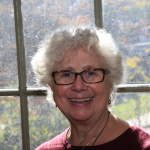
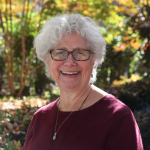
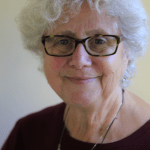
 Yesterday I had my picture taken by a professional photographer. Jo was terrific! What an angel! She took pictures of me smiling, laughing, dubious, chatty, and serious. Even though it took her almost half of the one and a half hours we were together to help me relax into the process, I remained inwardly tense, cautious, and embarrassed the entire time.

I guess I really do not like having my picture taken. I realized it was all the attention that was being paid to me by a person standing in front of me with a camera that made me the most uncomfortable. Jo photographed me in every corner of the house and out in my yard. There were over a hundred photographs to choose from.

After Jo left I scrolled through them over and over again, and struggled to recognize the faces staring back at me. "Is this me?" I kept asking myself. This gray-haired older woman? There was just no way to deny the fact that I have aged. It was, in a way, devastating. I kept on wondering just how much life time I have left. I went to bed hoping that if I slept on it I would wake up and rediscover me in the morning.

But … no … there I was … again … staring out at me as I scrolled through the photographs. How on earth would I be able to choose just one picture for the cover of my forthcoming book? 

I know, I know. I hear you say out there:"You're only as old as you feel." But the reality is hard to deny. I simply have to face it. Young Tamarika is gone! 

And autumn has arrived. 

30-year Anniversay

Tamarika2

[Tamarika in Manhattan, 1987]

Thirty years ago I met the United States of America for the first time in my life. It was October 1987, and I was thirty eight years old. I came to spend a month here: Three weeks in Buffalo, where I was being recruited to study at the University at Buffalo, and one week in Manhattan with my beloved nephew, my Scrabble buddy.

I fell in love with the autumn colors of Western New York, and with the idea that I could change my life and afford my son opportunities I would never be able to do in Israel as a single mother. At the outset, I had absolutely no idea about how difficult the whole immigration thing would be. But I had hope for a future other than the life I was leading at that moment. I desperately needed to make a break for myself and my son, and leave behind the pain and hurt of my life at that time.

Much more importantly though, I needed to discover my self-worth, and how to believe in and validate myself. It would take many years of hard work and therapy learning to adjust to two different cultures: that of America, and the other of academia. Both completely foreign to me. I muddled along making many mistakes along the way. It was tough, even excruciating, and at times I thought I wouldn't make it.  

Thirty years ago as I sat in the yard of my professor, who was recruiting me, looking out at the woods behind his home, I imagined how it might be if I immigrated to the States. Now, alone in my office at work I type this post and raise my coffee cup in celebration of this anniversary. It's a milestone all right. In a few days, the final draft of the manuscript of my latest book will be on its way to the publisher. I have so much to be thankful for.

I made it through, thanks to my perseverance, the support of my husband, and a few outstanding friends, and am reminded of a poem by Langston Hughes that a fellow student and friend gave me during my first year in Buffalo, and which I have carried in my wallet ever since:

Mother to Son

Well, son, I’ll tell you:
Life for me ain’t been no crystal stair.
It’s had tacks in it,
And splinters,
And boards torn up,
And places with no carpet on the floor—
Bare.
But all the time
I’se been a-climbin’ on,
And reachin’ landin’s,
And turnin’ corners,
And sometimes goin’ in the dark
Where there ain’t been no light.
So boy, don’t you turn back.
Don’t you set down on the steps
’Cause you finds it’s kinder hard.
Don’t you fall now—
For I’se still goin’, honey,
I’se still climbin’,
And life for me ain’t been no crystal stair.
 
Three years ago at Mining Nuggets: Changing the life script

The last word

Quote of the day:

In the end, the writer has the last word … Nicole Krauss, Radio Times, NPR

Recently, while sifting through old papers in my memory box, I found a correspondence between my mother and I from 16 years ago. On this six month anniversary since my mother died, these letters reminded me of the complexity of relationships and emotions. Indeed, my letter to her back in 2001 was a tribute to her, and I wish I had read it aloud at her funeral in March this year.

On November 17th 2001, I wrote my mother a letter:

Dear Mom,

I have been thinking about you a lot. I thought about how much you always helped others and how you enjoy life through all your suffering. I see, in myself, pieces of you and I am so proud and happy that you are my mother. My strength, determination. The fact that I help anyone – doesn't matter who they are, where they come from – doesn't matter how much it costs or how risky it will be. That comes from you. My ability to not just accept what someone tells me – but check it out (research it!) – that comes from you. Although you were not a major political activist, I learned from you that injustice and intolerance is not right. I learned about brutal honesty from you! And I love that. I learned from you that one could always make things better. Even in my darkest hours, I always find a way out. I learned that from you. Money is no object! I learned that from you. Love of – no not love – passion for music – I learned from you. Passion for drama, I learned from you. All these wonderful pieces of you are inside me. I own them and have made them a part of me. And I am the richer for it. And so is my son.

I know that you and I – our relationship – have been challenged through the years. So many struggles and fights. But my love for you is strong and I am deeply grateful for so much of what I have learned from you. I admire your courage, Mom. You tirelessly search for happiness and find it in beautiful moments, beautiful gardens, beautiful books, movies, with interesting people, and with children. You taught us all to love children – to respect children – and to fight for them. Each of us fights for our children – in our family – in deep, respectful ways. Sometimes the love and fight for our children seems weird – but we all know that our children are the most precious. You taught us all that.

You are a work of art, Mom. And I cherish and appreciate you so much. I am writing you this letter in a gorgeous hotel in a beautiful wooded, park-like area of Washington D.C. It is early in the morning – sun shining through the windows and beautiful fall leaves – red, orange, rust-colored, are brilliant with the sun's rays. I will meet with the book editor today at noon to see what he has to offer/suggest. And I remember you giving me a typewriter for my 16th birthday! What a gift that was, I wish I had held onto it all those years. You taught me that writing, knowledge, education is so important. You were right!  And I have learned that it is very important to be yourself no matter what. It's tough. It makes people mad and we lose people along the way who can't take it – but being who we are is more important than anything.

Am going to do my workout and prepare for my meeting. I am so excited. And you are the only person I felt like sharing this with! I always remember you sitting by my bed when I was little and you would tell me the story of how, one day, I would dance at Covent garden – and you would be up in the box watching. Well – today sort of feels like that story.

I love you, Mom. Thank you.

Tamar

A month later, on December 19, 2001, my mother wrote me a letter in response. Here follows part of it:

My darling Tamar,

Here I am in  Manchester – it was lovely to find your pig on arrival [my mother loved pigs and I had sent her a picture of one] and he is on my table now instead of one of the family! Did you get my message on your phone the other day before I left? I travelled on British Airways and had to change planes in London as there isn't a direct flight anymore – perfect attention from start to finish and tasty fresh food – so different from Air Canada. This letter is meant to be an answer to the overwhelming letter that you sent me – the one that I am most terrified to touch – when I go back I intend to read it quite often and get used to it and what it offers, there have been many times in my life that I felt I was standing alone on top of a cold mountain with big winds roaring around – I am not being dramatic as I am not a morbid person. That is just the way I felt but now your letter has made me feel a warm soft blanket wrapped around me and great security. I wanted to write something down so that when I am dead you will have something to hold and look at and you will remember this happy time we had together. The telephone conversation is not solid enough. It will fade away.

[She then went on to describe news about her life in Israel and her visit in Manchester. She concluded:]

Happy Xmas and New Year – special love to [my son and husband] xxx

As ever

B/Mom

The pain I have been feeling since my mother's death has surprised me, because I thought I had worked it all out between us. But, somehow, the end of her life has given me permission to allow myself to experience feelings, which I had stifled during my childhood in order to survive and continue a loving relationship with my mother going forward. I realize without doubt that we loved each other, and that we competed with one another as women often do.

While I will continue to write and have the last word when it comes to my version of our relationship – I feel happily and with much emotion, that my mother has the last word in her moving response to my letter sixteen years ago in 2001, on the eve of my becoming a published author two years later.

She knew that putting words in writing would give me something to hold onto when she died. A testament to her understanding about life, and the fierce, complicated love she had for all her children – me, included.

When darkness rolls away

IMG_0678

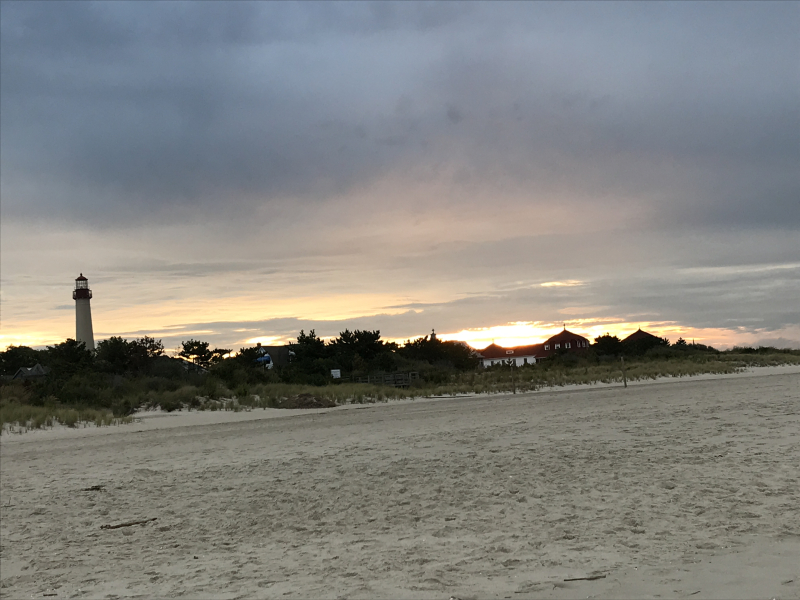
[The lighthouse at Cape May Point]

Early this morning, before the sun could struggle through the clouds, I was on the beach breathing in the cool breeze of ocean air. Sea gulls were my companions as I looked out to sea. I am feeling happy. Coming to the ocean to celebrate Rosh Hashanah was the best thing I have done for myself in a long time. The new year is quickly becoming a time of healing and renewal. It looks like I might have reached the edge of the exit to the tunnel, and the light is clearly shining. 

Yesterday my husband joined me and we went for a swim together in the ocean. The water was still warm enough, and the salty sea washed over us as we splashed, swam and laughed out loud at the joy of it all. "Hey!" We exclaimed, "This is turning into a vacation!" 

IMG_0616

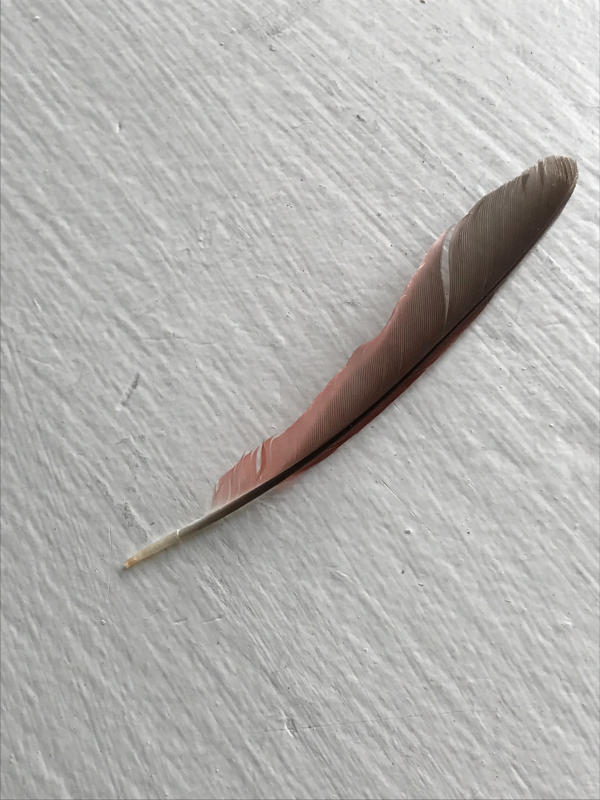
I love to look in nature for symbols and signs that could have relevance for me. It's part of my spirituality. It's a sort of game I play, because I am not sure that I believe in these things. For example, like finding a Cardinal's feather under foot on a morning walk in my neighborhood in Philadelphia recently. I decided to take it as an auspicious sign. I mean, why not? 

IMG_0668

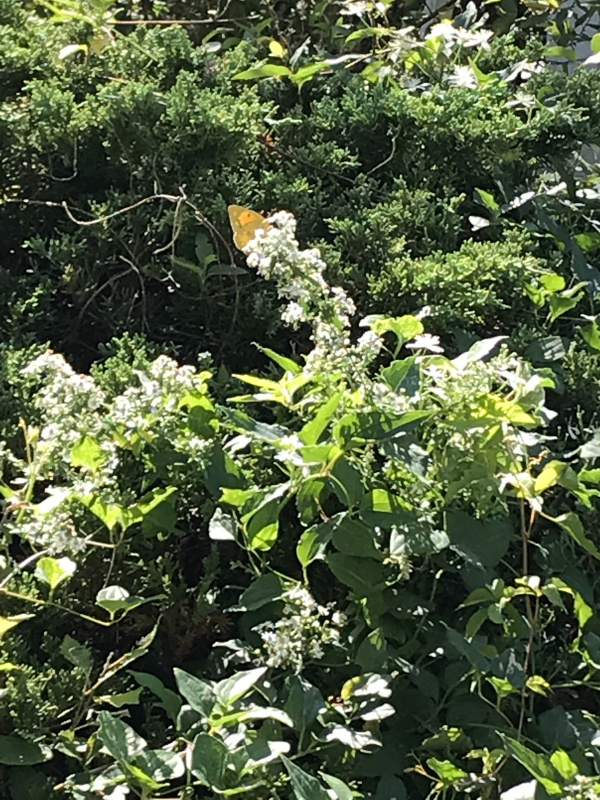
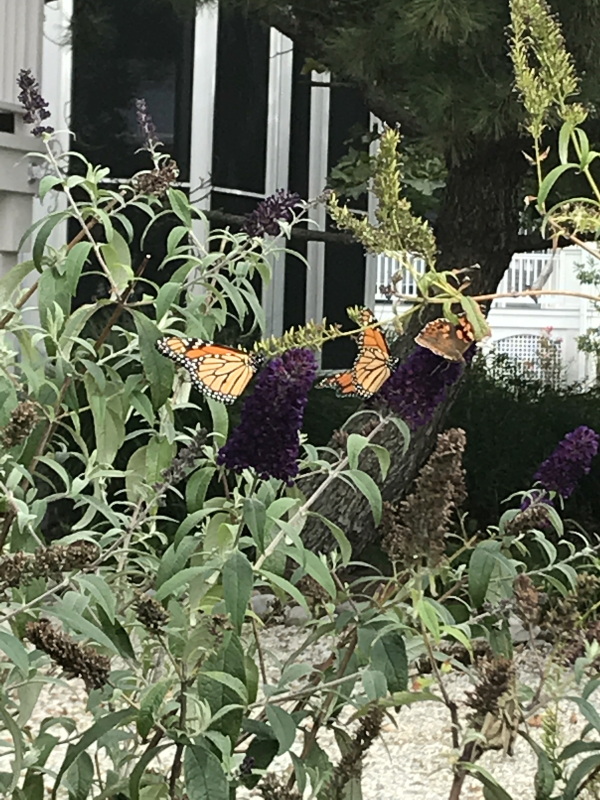
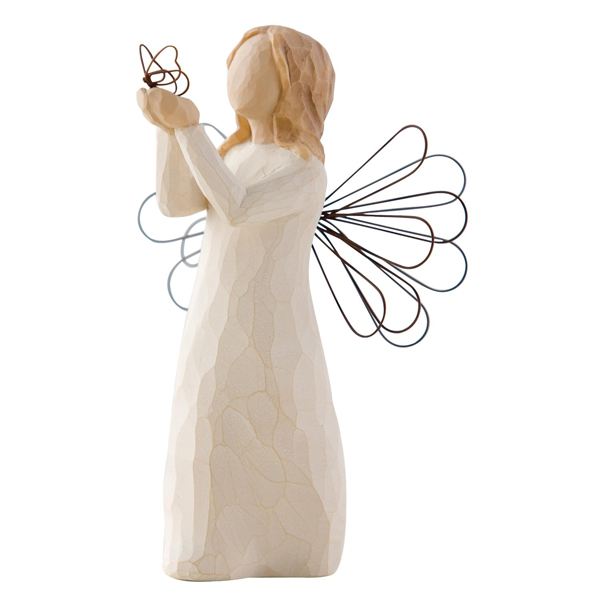
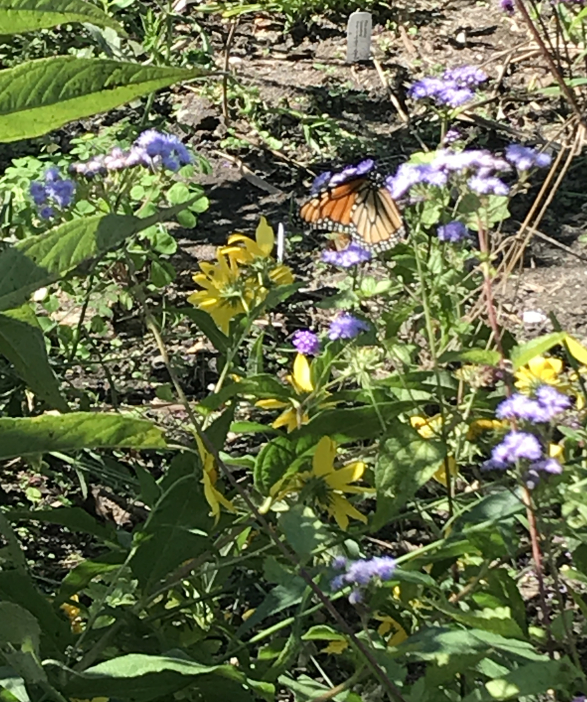
In the fall, Cape May Point is a destination for migrating birds and butterflies. So, wherever I go while down here, butterflies are everywhere. Even on the beach. They fly around my head and flutter through the air. They are on bushes and flowers, and flittered around me on my four mile walk through the state park yesterday. I am using them as a symbol for the new freedom I am feeling from the shackles of my past emotional wounds. They remind me of a speech a very dear friend gave at the party for the publication of my first book in the fall of 2003. She compared me to a butterfly emerging from its chrysalis, after having come to the states, acquiring three degrees and authoring my first book. At the time, her tribute to me moved me deeply. I placed the photograph of her giving the speech in a small crystal frame on my bookshelf accompanied by a "Willow Tree Angel of Freedom," of a young woman holding up a butterfly with her two hands. 

IMG_0684 001157_1000239685_NoColor

So, going forward, I choose to gather symbols and signs of all these "angels of freedom" fluttering around me as I wander through this charming ocean-side place, and hold them close, as I embark on a new life journey of freedom from past pain, and becoming healed and whole.

The chocolate cake

In a deep glass bowl I combine 4 ounces of butter with one and a half cups of sugar. I pound at the mixture with a wooden spoon until I can get it to be as smooth as possible. Then I add three eggs and stir and stir, sometimes whipping it as quickly as the wooden spoon allows. Now is the time for a cup of flour, three quarters of a cup of shredded coconut, three quarters of a cup of chopped walnuts, one teaspoon of vanilla essence, half a cup of baking cocoa, and about nine ounces of plain yogurt. All these ingredients are added in one at a time. This takes muscle to mix it all together – at first gently so that stuff doesn't get shaken out of the bowl, and then making much stronger stirring motions – round and round, and folding in with large circular movements. 

Now I prepare the baking pan by wiping it all over with butter, and then shaking over a light covering of flour so that the batter won't stick. Oven is heated up to 350 degrees and the cake is placed into the oven for about thirty five to forty minutes. When I take it out, I have to cut just a tiny piece, piping hot with steam coming out the inside, and taste it to be sure it has come out the way I remember. Sometimes it feels a tad dry, and others just right. The walnuts are an addition to the recipe only since I live in America. In Israel, when I used to bake this cake almost every Friday in preparation for Shabbat, I used "shemenet" instead of yogurt. In the States, I changed to yogurt as I wasn't sure what the equivalent to the Israeli milk product was. 

When I was a young mother living in Israel I wanted to create a home for my son. A place of comfort and stability. I was not really sure how to accomplish that. Did I imagine it from movies or books I had read – or perhaps from visiting friends in the neighborhood? Am not sure where I got the idea that cake was a way of making our small apartment a home. An old friend gave me the recipe, and for decades, until my son became gluten and sugar free in his diet a couple of years ago, he had always loved the chocolate cake. 

In any event, it has been years since I made it , and this summer I started baking it again – consistently – every ten days or so. Only this time I made one and a half the quantities so that it could fit into a larger pan. That way it would have to cook in the oven for forty to fifty minutes instead of thirty five to forty. Plus, it seemed to come out richer, more wholesome in taste. It has been going down well at home and in the neighborhood. A couple of people roll their eyes and say things like, "Oh my God. This is delicious!" And, it certainly is tasty early in the morning with our usual cup of coffee.

But, more than all that, it makes me think of days gone by, years and years ago, when my son and I lived alone in our tiny apartment in the little town of Ramat Hasharon, Israel, in a place called home.

Musings

Starting the new academic year with a new computer. This could be considered a minor traumatic event, for I have loved my MacBook Pro for six years. He has served me extremely well. Except he seems to have become quite the heavy dude especially when I am dashing through airports on my way to this or that state or country. So, me and my honey strolled into ye olde Apple Store yesterday and oohed and aahed at all the newness of a new MacBook Pro. A sweet little space grey three pounder. Hm … yum! I look around sheepishly as I type this blog post on my old trusty fellow – silvery, large, cumbersome, but very faithful to the end – I am admonished for never having backed up old faithful in all the six years – except for iCloud of course. So, as we speak, I am learning all about back up, migrating data, thunderbolts, hubs and more.

I always enjoy learning a new language.

My father spoke many different languages. I loved that about him. He relished different cultures, foods of every description – he was a gourmet, and taught me how to allow cheese to sweat before eating it. The taste is superb, rich, authentic, and ever so cheesy. He would use a fork and knife to eat an orange with a sprinkle of salt. He inspired and delighted me, and loved me gently. I dedicated my latest book to him. When my mother died earlier this year, I felt like finally I could come out of the shadows and love my father openly – no longer concerned about hurting her for fear of being "disloyal," for she disliked him so much. I wrote: I dedicate this book to my father, Ezekiel Israel, who loved his “Tamarika” gently.

So, here I am becoming acquainted with my new little sweetie MacBook Pro 13 inch. I started out these musings on my old dude and buddy, and am concluding with the new space gray. Skies are cloudy and there is a chill in the air. Driving around yesterday I noticed one or two clusters of autumn colors. Am feeling excited and happy – after a wonderfully intense working summer, and back to teaching next week … all bodes well, dear readers. There is a new year a-coming, and it starts this fall!

A year ago at Mining Nuggets: Critical thinking is critical

Pay attention to children with an open heart

Quote of the day:

When a person doesn't have gratitude, something is missing in his or her humanity. A person can almost be defined by his or her attitude toward gratitude. Elie Weisel

This morning I received an email from a friend, who wrote: 

"Good luck with the writing. I hope it is cathartic. I am sure that your plumbing the depths of memory will be redemptive – in helping so many others to pay attention to children, with an open heart."

I was grateful for her words because of how succinctly they captured the essence of the book I am writing. I sense, as I head toward full retirement in a couple of years, that this is the last education book I will write, and it is one that is the hardest for me. Mainly, because of how painful it is for me to think about the times I have seen adults treat children with disdain, humiliating and shaming them, when what children really needed from them at the time, was compassionate relationship – adult attention. And, because compassionate relationship, acknowledgment and validation is what I craved when I was a child, it taps into my own emotional experience, and I feel for children in our care even more.

All this on the heels of my mother's death only four months ago. I mentioned to my therapist a couple of weeks ago how grieving my mother is so much more difficult than I imagined. He responded, "You are not grieving as much for your mother as you are for your life – your childhood life where your feelings were stifled." 

While the pain is being felt by me for me and all children everywhere, and it is, at times, acute, it is also, as my friend wrote, redemptive and healing. I sense a type of release as each memory suddenly presents itself, and as I weep it up and out. A lightening and unburdening follows as I allow myself to experience the yearning I held in for so long. 

My friend's words help me realize how important this book is for me. It has been residing inside my brain for all my life. I have no illusions that it will change the world, or even sell very well – most education books don't! But, really, if it helps even one adult pay attention to one child with an open heart – I will feel satisfied. I would have followed people to the ends of the earth because I felt, for a brief moment, that they related to me – accepted me with compassion and understanding, and I know for sure that many of those moments that came from the kindness of strangers along the way saved me and nurtured my resilience. 

In a weird way, I am grateful to my mother too. I mean this most sincerely. She needed me emotionally between my ages of 7-18, and although ultimately I suffered by putting my needs away and placing her front and center, I learned to care for another. I learned hands-on about empathy and compassion from a very early age: whether it was through carrying away pots of her throw up when she was pregnant with my younger brother when I was seven; wiping her forehead with a cool cloth when she was tormented and crying, anxious about my step-father leaving her; listening to her early morning stories about whether sex was good or bad the night before with my step-father; listening to her crying and fretting about my older siblings for this or that at one time or another; actively listening while she complained about the servants, family members, her friends and all other people who might have been out to "get her" – the list is endless.

I learned early on to put aside whatever it was I was doing, thinking or feeling, and just be present for her. I learned to silently listen and hold her in my heart. And many, many times, even as a child, I would hold her and hug her to comfort her, and tell her that everything would be all right. And although my service to her was thankless, from the lack of her gratitude, I learned to be grateful for any crumb of acknowledgement that would come my way. I realized this most especially just a couple of years ago before she died, when she was bed ridden and sitting in a chair in my sister's house. She was complaining because her finger and toe nails hadn't been cut in awhile. I immediately asked for clippers from my sister and gently and carefully cut her finger nails. Then I got on my knees at her feet and clipped her toe nails. I was very gentle because she was nervous about having me do this. I spoke gently to her and stroked her when I could. When I was done, I sat back on the couch. My mother sat still a moment and then called out to my sister, "Tell the pedicurist I don't need her!" I stared at her, and thought: "Wow! Not even a tiny thank you." And my entire childhood flashed before my eyes. No gratitude for anything I had ever done for her. It was a revelation.

At that moment, I felt deep sadness for my mother. Gratitude lifts us up out of bitterness and sorrow, and without it she was, as it happened, left with so much unnecessary misery when she died.

Of course, as an older woman with life experience and knowledge about child development and the care and education of young children, I now understand that I did all that in the hopes my mother would love and appreciate me. Yes. I did it for her attention. So, while I learned to care for another with empathy and compassion, I also learned to make myself invisible, and to stifle aching for mothering myself. What a bind.

Hopefully, as I release these memories and understandings, and learn to mother myself more and more, I will find a balance in helping others, with being present for me as well.

And, more importantly I can give to children and adults what I wished I had received.

The princess and the frog

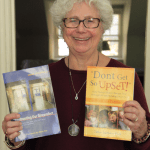
In the continuous exploration to understand my emotional story, there are two incidents both decades apart, that have stood out in my memory. Now in my late sixties, I allow myself to experience old, stifled feelings, and realize that both incidents have remained vividly in my brain namely because they are symbolic, and represent quite clearly for me the essence of my relationship with my mother. The first I wrote about in Don’t Get So Upset: Help Young Children Manage Their Feelings by Understanding Your Own (Jacobson, 2008). As I look back and reflect upon that incident, I think that was the night I officially lost my emotional birthright. The way I understand it, from that night on, I was no longer a priority for my mother.

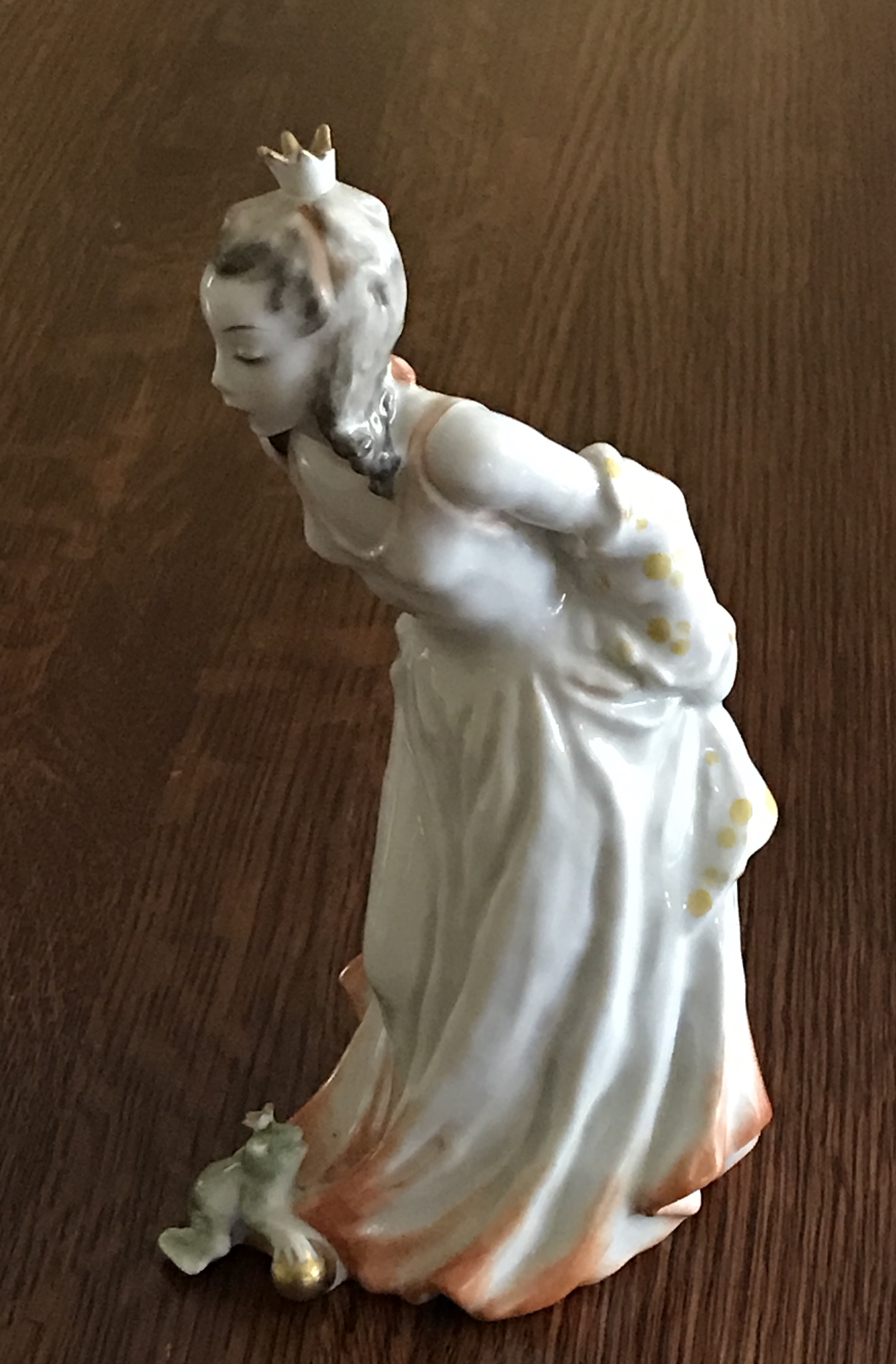
The second incident happened over a decade ago when, as a grown woman, I traveled to Israel as I did each year to visit my mother, who was then in her late eighties. At that time, she was living in a small cottage on her estate having rented out her larger house. By then I already knew that she planned to leave her entire estate with all its contents to my younger brother, for she had notified us all of her decision over twenty years prior, a few years before I immigrated to the United States. During the summer of my visit, mother's little house was unbearably hot, and she had to haul her laundry up to the top of her property to my brother’s cottage. I went out and surprised her by purchasing a small washing machine, air conditioning unit, and a CD player so that she could listen to the classical music that she loved. One day, shortly after I had given her those gifts, my mother came into the living room and said.” Tamar, choose an ornament to take back to America with you, because as you know everything is going to your brother when I die.” I was surprised at her offer, and, although she did not mention it, I assumed it was her way of showing gratitude for the items I had bought for her. I looked around the room until my eyes rested on a porcelain figurine of the princess and the frog. Even though the crown on the little frog seated at the princess’s feet was chipped, I loved the ornament, which had been in our home since I was young. Feeling excited for the chance to receive such a gift from my mother, I told her of my choice. “No,” she responded sharply and instantly, “That’s your brother’s favorite.” As I was familiar with her usual double bind type interactions with me, I regrouped quickly, giggled and said, “You choose something for me then.” I cannot remember exactly what she chose for me, but when I returned to my home in the United States, I threw it away.

For years when I retold that story, I described it as a humorous anecdote, some kind of idiosyncratic event about my mother’s outrageousness. Recently, since my mother’s death, I finally allowed myself to feel how that incident had, in fact, hurt me. After all she had bequeathed her entire estate, including furnishings, art works, and property to my brother – and she had put me in the position of a double bind – choosing any item, which she immediately took back. In addition, I had just given her items necessary for her comfort. And yet, she chose to deny me in that manner.

While writing my book lately, and reflecting on my relationship with my mother, I suddenly understood how mean and selfishly my mother acted toward me. It hurt me deeply and I wept, realizing that this incident had stayed with me for over a decade because it was representative of how she had always treated me: like an outsider with no rights. When I was eight years old and ill with a tapeworm (as I described in my book), that night she beat me and yelled at me thunderously. However, what was significant about that event wasn't the beatings as much as all the while her saying how I was a disturbance and burden to her husband (my step-father) and new baby (my younger brother). I had to forfeit a mother’s love and support in times of physical need for others more important to her. And then again, years later when confronted with my choosing any ornament at her bidding, I forfeited my wishes for someone more important to her.

These were lessons I learned in my early childhood. Not to be a burden on anyone. And definitely not to express, or even experience any feelings that would make my mother more anxious than she already was. For me, it was not only that I did not receive the unconditional loving and attention a small child deserves, it was that I learned to constantly give my mother the loving and attention she needed, by forfeiting my emotional needs. Indeed, I learned I was not deserving of anything.

Fullsizeoutput_101e

After writing this passage a few days ago, I went to my computer and searched for a picture of a small statue depicting the princess and the frog. To my surprise, I discovered, on an Etsy website, an original Rosenthal porcelain figurine from 1939 – an almost exact replica of the one my mother denied me in the double bind choice she offered me so many years ago. It was quite costly, but I instantly purchased it as a gift for the emotionally deprived child within me. 

Yesterday, the princess and the frog arrived in the mail very carefully wrapped up in a large box. I lifted her out and cried and cried. Now she stands before me on my desk as I continue to write my book about "everyone needing attention." 

I figure, it’s just never too late to heal the child within me, or for me to give me the love and attention I lacked growing up.

Two years ago at Mining Nuggets: Memoir again