
Born for Love:
Why Empathy is Essential and Endangered by Maia Szalavitz and Bruce D. Perry, M.D., Ph.D. (2010) William Morrow: an Imprint of Harper Collins Publishers.
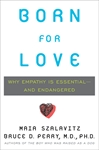
With only a few pages remaining to read, I must say that everyone who cares anything about the future of our society and the world, not to mention early care and education, should read this book.
Now, you may say that I am biased. After all I was privileged, honored, and extremely grateful a few years ago to have been invited as a Fellow of the ChildTrauma Academy. I have always been concerned about teachers' relationships with young children in our care and in our classrooms. Indeed, my own books, presentations, even blog posts, are consistently devoted to this subject!
However, since first hearing Bruce Perry speak many years ago, and all the many times since then, I am convinced that my work is based on, and guided and inspired by the work Dr. Perry does.
With that being said, let me reiterate:
Everyone who cares anything about the future of our society and the world, not to mention early care and education, should read this book.
First of all, it is very well written.
Second, the authors weave case studies of abused and neglected children like a winding river through so many different territories: including neuroscience, psychology, philosophy, politics, economics, human behavior, evolution, education – all the while making connections between how our brains develop as individuals, in families, communities, societies, the world at large. It kept this reader riveted emotionally and cognitively. Indeed, I could not put it down. I shed many tears feeling the passion, concern, even humor – or as Joseph Campbell said, for the "joyful participation in the sorrow of the living." But most importantly of all is that woven through the fabric of the discussions, stories, analysis and sharing of research, is the concept of compassion in all its forms. The book is written with, and the theories are enveloped by compassion.
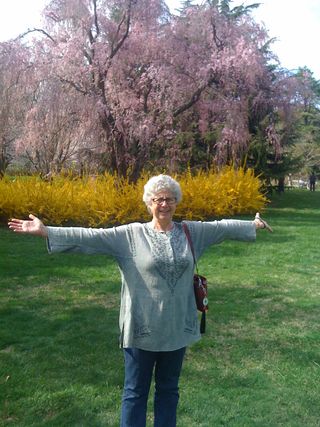
The authors literally wrap their arms around humanity and the world.
Third, I was inspired. Once again. If ever I felt that my professional life is winding down because of my age, I shoved that aside, knowing in my heart and soul, that I can never give up the work that I do. I must and will press on forever – spreading my ideas and realizations, sharing my own life story if that helps others to understand theirs, and all the while, spreading Perry's message through his speeches and writings together with Szalavitz.
I share a few quotes here from the Introduction to the book in order to, perhaps, entice you into reading the rest:
Empathy underlies virtually everything that makes society work – like trust, altruism, collaboration, love, charity … By understanding and increasing just this one capacity of the human brain, an enormous amount of social change can be fostered. Failure to understand and cultivate empathy, however, could lead to a society in which no one would want to live – a cold, violent, chaotic, and terrifying war of all against all … And it's a culture that we could be inadvertently developing throughout America if we do not address current trends in child rearing, education, economic inequality, and our core values. (Pages 4 & 5)
We are indeed born for love. But at birth, we are not yet fully loving. Infants' brains are the most malleable – and vulnerable – that they will ever be outside the womb. The gifts of our biology are a potential, not a guarantee. As with so many other human potentials present at birth, empathy and love require specific experiences to develop … babies don't learn to care and connect without specific early experiences. Changes in the timing, nature, and pattern of these experiences will influence how relational capabilities emerge in an individual. These changes even help determine which of our genes will be activated and which will never reach their potential – for good or for ill. (Pages 5 & 6)
… and it all starts with understanding the way our brains connect us to one another. This matters fundamentally because we live our lives in relationships. Shy or outgoing, rich or poor, famous or obscure – whoever we are, without connection, we are empty. Our interactions thrum with rhythm. From the moment of conception to the end of life, we each engage in a unique dance of connection. The themes and steps are shared by all humanity. They vary only in details and flourishes across culture, race, gender, and historical time. But they are inevitably shaped by those around us. (Page 3)
 tamarjacobson